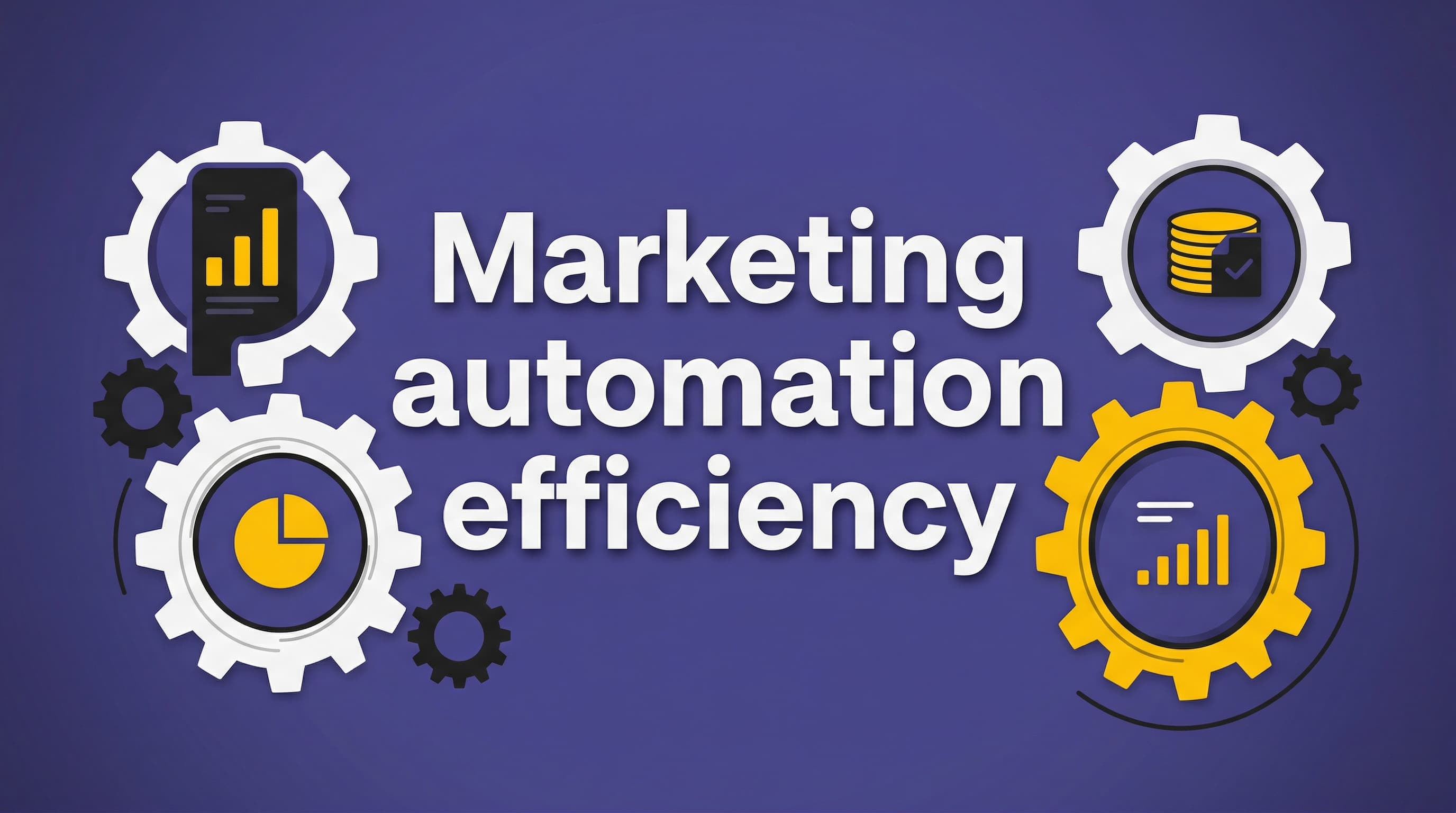
Marketing automation is the use of software and technologies to automate repetitive tasks, such as email sending, social media management, and lead segmentation, enabling personalized communication at scale. The core argument for adoption is that automation software reduces operational overhead, allowing teams to focus on revenue-generating strategy. Marketing automation is the integration of inbound marketing software and CRM tools to optimize sales processes and lead management. According to Salesforce (2025), companies that implement integrated marketing automation workflows reduce time spent on repetitive tasks by up to 45%, allowing teams to focus on creative strategy. Implementing marketing automation software, lead nurturing flows, automated digital marketing, inbound marketing, and CRM tools are crucial steps for modern scalability. At Flow Productions, we believe that technology should serve human creativity, not replace it. Leading companies use this software to outperform the competition in dynamic digital markets.
What is marketing automation and what are the benefits of marketing automation tools for business?
Marketing automation is the set of technologies and software strategies designed to automate advertising campaigns and repetitive sales processes without constant human intervention.
Marketing automation is a technological solution that orchestrates digital interactions at scale to qualify leads. It uses behavioral triggers to personalize messages, ensuring the CRM is always updated with accurate data, which results in greater operational efficiency and reduced recurring costs for sales and marketing teams.
Marketing automation works through platforms that centralize customer data, allowing for the creation of personalized journeys that react to user behavior in real-time. By eliminating manual work, companies can ensure the right message reaches the right customer at the exact moment in the sales funnel.
The importance of system integration
For automation to be effective, it is necessary to integrate tools such as CRM, email marketing platforms, and data analysis systems. According to Gartner (2025), organizations that use integrated marketing ecosystems observe a 22% increase in the conversion rate of qualified leads. Tools like HubSpot, Salesforce, and Marketo are fundamental pillars in this digital transformation.
- Advanced segmentation: Creation of dynamic lists based on behavior.
- Lead nurturing: Automatic sequences that educate the customer until purchase.
- ROI analysis: Real-time monitoring of each campaign's performance.
- CRM management: Centralization of data for automated digital marketing, lead scoring, lead nurturing flow, CRM platform, and sales funnel management.
How to implement a marketing automation strategy and lead nurturing flows via inbound marketing?
Implementing an automation strategy requires rigorous planning that begins with cleaning and organizing existing data. Before choosing the tool, it is essential to define business objectives and map the customer journey, ensuring that each touchpoint is relevant and timely for the target audience.
Implementing an automation strategy involves mapping the customer journey from the top to the bottom of the funnel. The process requires data cleaning, configuring relationship rules in CRM tools, and creating automated nurturing flows that deliver relevant content to the lead at the exact moment of their purchase decision.
The role of strategic consulting
Many companies fail when trying to automate disorganized processes. Strategic consulting helps align technology with brand goals, ensuring that automation does not become a barrier to the user experience. In 2026, data-driven personalization is the minimum standard expected by consumers.
According to McKinsey (2024), 71% of consumers expect companies to offer personalized interactions, and 76% feel frustrated when this does not happen. By using well-structured content strategies in conjunction with automation, your brand can maintain a human voice while scaling operations sustainably and efficiently.
Frequently asked questions
What is marketing automation and what is its role in CRM?
Marketing automation is a software category that automates the sales funnel, including email marketing, lead nurturing, and campaign management. This technology allows teams to achieve operational efficiency by reducing manual tasks by up to 45%, according to data from Salesforce (2025).
What are the benefits of using marketing automation tools?
The benefits include conversion rate optimization, reduced operational costs, and precise audience segmentation. According to Gartner (2025), integrating marketing ecosystems improves lead conversion by 22%, ensuring the right message reaches the qualified lead at the ideal moment.
Does marketing automation replace human creativity?
No, quite the opposite. Automation frees up time for creative teams, allowing them to dedicate themselves to higher-value tasks, such as brand strategy, storytelling, and innovation. Technology handles technical execution and data analysis, while humans define the direction and essence of communication.
How do I choose the best automation tool?
The choice of the ideal tool depends on your company's goals, data volume, and available budget. It is important to consider ease of integration with your current CRM, platform scalability, and offered technical support. Always evaluate whether the tool solves your specific business challenges.
What is the average cost of implementing marketing automation?
The cost varies significantly depending on tool complexity and database size. Beyond software subscription, you should consider the investment in consulting for implementation and team training. The return on this investment is generally visible through time optimization and increased sales.
The future of operational efficiency
Marketing automation is not just a passing trend, but a competitive necessity in an increasingly digital market. By integrating intelligent processes, your brand gains the agility needed to adapt to constant changes in consumer behavior, maintaining relevance and effectiveness across all communication channels.
Adopting nurturing flows, inbound marketing strategies, and CRM platforms is fundamental to scaling results in 2026. Automation is not just technical; it is the foundation of modern operational efficiency.
At Flow Productions, we are ready to help your company design and implement automation flows that drive real results. If you are looking to optimize your operation and unleash your team's creative potential, contact us for personalized strategic consulting.
About the author