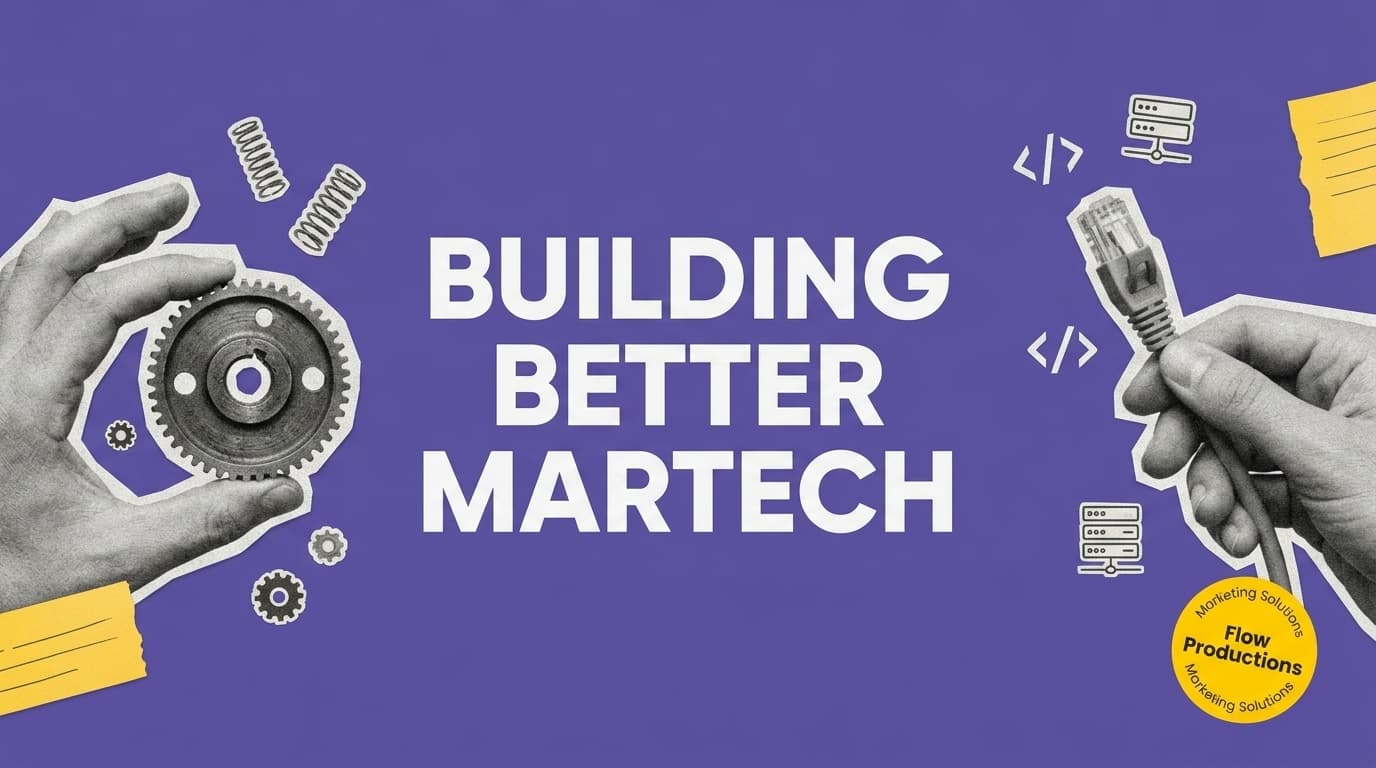
According to Gartner (2025), companies that integrate their marketing technology stack effectively see a 25% increase in marketing ROI compared to those using siloed, disconnected tools. According to Salesforce (2026), businesses that audit their martech stack annually see a 15% reduction in annual software spend. A martech stack is the collection of software and applications that a marketing team uses to execute, manage, and measure their campaigns across the entire customer journey.
Building a high-performance ecosystem isn't about buying the most expensive tools; it’s about ensuring your systems talk to each other. When you focus on Go-to-Market Strategy alignment, you stop wasting time on manual data entry and start focusing on what actually moves the needle.
Why does your martech stack matter?
Your stack is the digital backbone of your business. If your CRM doesn't sync with your email platform, or your analytics tool is blind to your social media performance, you are operating in the dark. According to HubSpot (2026), teams that unify their data sources reduce time spent on reporting by 40%.
Building a data-driven culture
At the heart of a human-centric approach is the CRM. By centralizing interactions, your team gains a clearer picture of who the customer is, turning cold data points into meaningful relationships. When tools like Salesforce or Slack are connected, they simplify communication, ensuring that everyone in the team is working from the same page without the usual friction.
This culture shift means less time troubleshooting technical issues and more time engaging with people. By leveraging analytics within this unified environment, your team can pivot quickly, responding to audience needs with empathy rather than guesswork. When technology is invisible and integrated, human creativity truly takes centre stage.
The cost of disconnected tools
When tools operate in silos, you lose the ability to track the full customer journey. This leads to fragmented messaging and poor user experiences. Instead of guessing what works, you need a cohesive setup that provides a single source of truth for your customer data.
A fragmented stack is a growth killer.
How does data integration drive growth?
Data integration is the process of unifying information from different sources into a single view. By centralizing data, teams create a single source of truth that powers better decision-making. According to Deloitte (2025), companies with unified data ecosystems report 20% higher customer satisfaction scores than their competitors.
The power of a unified view
When your data is unified, you stop looking at vanity metrics and start seeing real trends. This visibility allows for precise adjustments in your marketing spend and messaging, ensuring every touchpoint is optimized for conversion. A connected ecosystem effectively turns your data into a strategic asset that guides every campaign move.
How do you choose the right tools for your business?
Choosing the right technology starts with identifying your biggest bottlenecks. Before you sign up for a new subscription, map out your current processes. If you are struggling with lead management, prioritize a robust CRM. If your content output is slow, look into Content strategy & editorial planning, Portugal to streamline your workflow.
Key factors to consider
- Integration capabilities: Does the tool have an open API to connect with your existing ecosystem? Remember, tools like Jira or Asana are only effective if your team actually enjoys using them. A high-performance stack serves the human, not the other way around.
- Scalability: Will this tool still serve your needs when your traffic or data volume doubles?
- Ease of use: If your team finds the interface confusing, they simply won't use it.
Aligning tools with human needs
Avoid the trap of feature bloat by focusing on how each tool reduces cognitive load for your team. Empathy-driven marketing requires systems that handle the heavy lifting while leaving space for human intuition. If a tool doesn't directly improve the user experience or simplify a team workflow, it likely doesn't belong in your stack.
According to Forrester (2025), 55% of marketing leaders report that their biggest hurdle in adopting new tech is the lack of internal training and platform adoption. Keep it simple and focus on tools that solve specific, painful problems.
How to integrate AI into your existing stack
AI is no longer a luxury; it is a necessity for staying competitive. Whether you are using AI Agents for Marketing and Sales to automate lead qualification or using LLM-powered tools to speed up content creation, the goal remains the same: efficiency.
Practical steps for AI adoption
- Automate repetitive tasks: Use AI to handle data entry, scheduling, and basic customer inquiries.
- Enhance personalization: Leverage AI to segment your audience based on real-time behavior rather than static lists.
- Predictive analytics: Use AI to forecast trends and identify high-value leads before they even reach out.
AI works best when it supports, not replaces, human creativity.
Frequently asked questions
O que é um martech stack?
Um martech stack é o conjunto de ferramentas e tecnologias que uma equipa de marketing utiliza para gerir, executar e medir campanhas. É a infraestrutura digital que sustenta a estratégia, permitindo ligar o CRM, e-mail marketing e análise de dados num ecossistema coeso que melhora a experiência do cliente.
Como escolher as ferramentas certas?
Escolha ferramentas com base nos seus gargalos operacionais específicos. Avalie a facilidade de integração via API, a escalabilidade da solução e a curva de aprendizagem da equipa. Priorize ferramentas que resolvam problemas imediatos, como a gestão de leads, em vez de investir em tecnologia complexa que ninguém utiliza.
Como integrar AI na minha estratégia?
Comece por automatizar tarefas repetitivas, como a entrada de dados ou agendamento de conteúdos. Utilize agentes de AI para qualificar leads de forma automática e personalize as comunicações com base no comportamento em tempo real do utilizador, garantindo que a tecnologia potencia a criatividade humana em vez de a substituir.
Qual o papel da integração de dados?
A integração de dados garante que todas as suas ferramentas comuniquem entre si, criando uma visão única do cliente. Quando os sistemas estão ligados, evita silos de informação, poupa tempo em relatórios manuais e garante que as decisões de marketing são baseadas em dados precisos e atualizados em tempo real.
Com que frequência devo auditar o stack?
Deve realizar uma auditoria pelo menos uma vez por ano. O ecossistema de marketing muda rapidamente e ferramentas que eram úteis há dois anos podem tornar-se obsoletas ou redundantes. Revisões anuais permitem eliminar desperdícios financeiros, identificar lacunas tecnológicas e manter a stack alinhada com os objetivos de crescimento.
Ready to scale your marketing operations?
Building a high-performance stack is an ongoing process of auditing, testing, and refining your tools. By ensuring your systems are integrated and your team is trained, you create a foundation for sustainable, long-term growth.
Ready to optimize your marketing ecosystem? Connect with us at Flow Productions to start building your future-proof martech stack today.