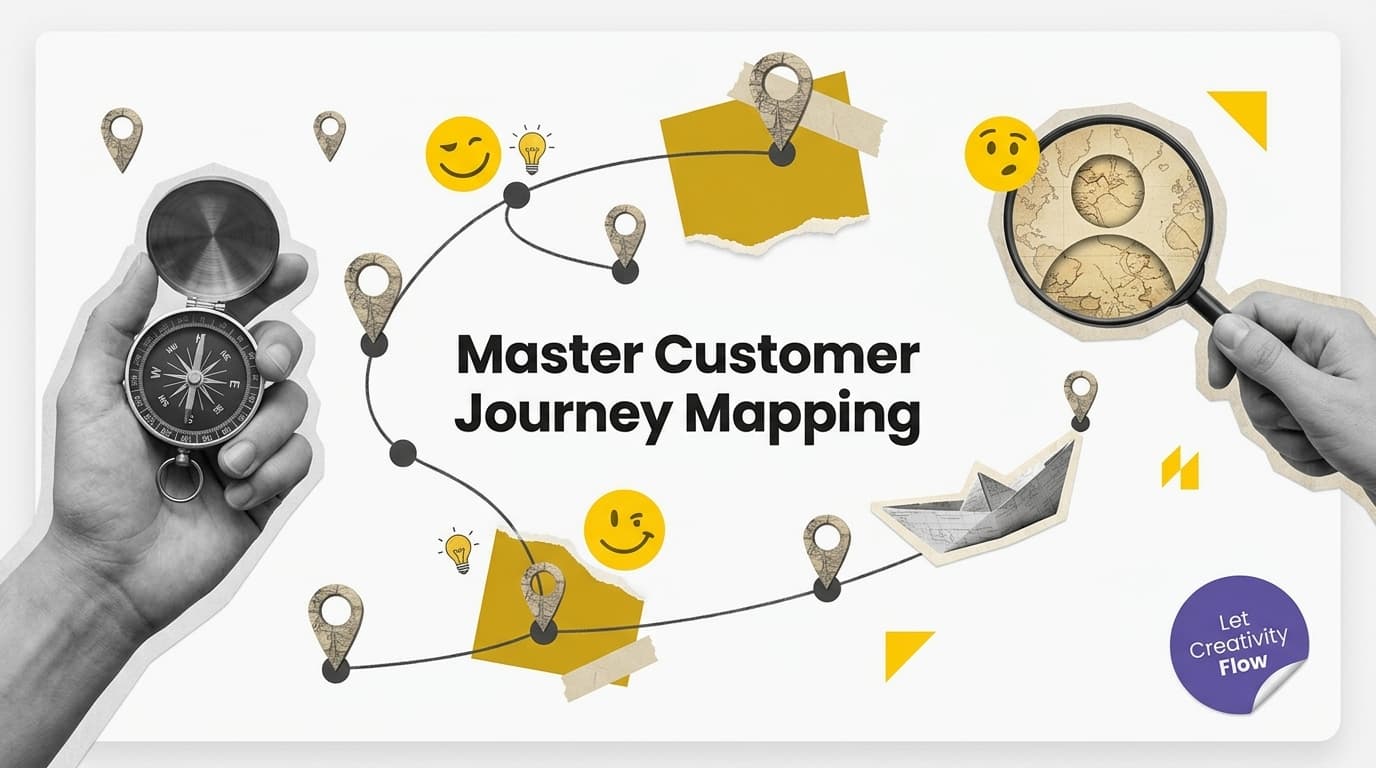
Understanding how your audience interacts with your brand is no longer a luxury; it is a necessity for survival. Customer journey mapping is the process of creating a visual representation of every experience your customers have with your business, from the first point of contact to long-term loyalty. According to Salesforce (2026), companies that implement data-driven customer journey mapping see a 25% increase in customer retention rates compared to those relying on static personas.
By visualising these touchpoints, you can identify friction points that might be driving potential leads away. If you are looking to refine your approach, our content strategy & editorial planning, Portugal services can help you align your messaging with every stage of the user experience.
What is customer journey mapping?
Customer journey mapping is a strategic exercise that documents the steps a user takes to achieve a goal with your brand. It moves beyond simple demographics to capture the emotions, motivations, and pain points a person experiences across multiple channels, such as social media, email, or your website.
Why it matters for your brand
- Identifies gaps: See exactly where users drop off in your sales funnel.
- Improves empathy: Understand the 'why' behind user behaviour, not just the 'what'.
- Aligns teams: Ensure your sales, marketing, and support departments are working from the same playbook.
Mapping the journey is the difference between guessing what your customers want and knowing exactly how to serve them.
How does a customer journey map work?
To build an effective map, you must start by gathering real data rather than making assumptions. According to HubSpot (2025), 60% of marketing teams now use integrated CRM data to inform their journey maps, ensuring that every touchpoint is backed by actual user behaviour rather than intuition.
The core steps to success
- Define your persona: Choose a specific customer segment to focus on.
- Map the touchpoints: List every interaction, from an organic search click to a support ticket.
- Identify emotions: Note how the user feels at each stage—are they frustrated, curious, or satisfied?
- Optimise for impact: Use these insights to refine your conversion copywriting & campaign messaging to better address user needs.
Data is the compass, but your strategy is the map that guides the user home.
Integrating technology and strategy
In 2026, the best maps are dynamic. They are not static PDFs that sit in a folder; they are living documents updated by real-time analytics. When you understand the nuances of your user's path, you can create websites optimised for AEO, GEO and SEO that anticipate questions before they are even asked.
How can you improve your current mapping process?
Improving your mapping process requires a shift from viewing the customer as a number to viewing them as a human with a specific problem to solve. According to Gartner (2026), businesses that actively iterate on their journey maps based on monthly feedback loops experience a 15% improvement in overall brand sentiment.
Focus on the human experience
- Talk to your customers: Conduct interviews to validate your map.
- Use heatmaps: See where users get stuck on your landing pages.
- Monitor feedback: Look for patterns in support tickets or social media comments.
A map is only as good as the data that feeds it; keep your insights fresh and your focus human.
Frequently asked questions
What is the primary goal of customer journey mapping?
The primary goal is to gain a holistic view of the customer experience. By identifying every interaction, you can remove friction, improve satisfaction, and ensure that your marketing efforts are perfectly timed to meet the user's needs at every stage of their decision-making process.
How often should I update my customer journey map?
You should treat your map as a living document. In 2026, market conditions and user behaviours shift rapidly. We recommend reviewing your map at least once a quarter, or whenever you launch a major new product, campaign, or significant change to your digital presence.
What tools are best for customer journey mapping?
While simple tools like whiteboarding software work for initial brainstorming, the best results come from integrating your CRM data with analytics platforms. This ensures your map reflects real-world behaviour rather than internal assumptions, allowing for a more accurate and actionable representation of the user experience.
Can small businesses benefit from journey mapping?
Absolutely. Small businesses often have the advantage of closer relationships with their customers. Mapping the journey helps you scale that personal touch by identifying exactly where you can automate helpful interactions without losing the human connection that makes your brand unique in a crowded market.
What is the biggest mistake in customer journey mapping?
The biggest mistake is relying on internal assumptions rather than customer data. If you build a map based on how you think a customer behaves, you will miss the actual pain points. Always validate your map with real user feedback, support logs, and website analytics to ensure accuracy.
Start mapping your path to growth
Customer journey mapping is an ongoing commitment to understanding your audience better than your competitors do. By focusing on the real experiences of your users, you can build a brand that feels intuitive, helpful, and essential.
Ready to turn your customer insights into a high-performing strategy? Contact Flow Productions today to refine your approach and create experiences that truly resonate with your audience.