According to Salesforce (2026), companies that synchronise their messaging across the entire customer lifecycle see a 42% increase in long-term retention compared to those focusing solely on acquisition. Customer lifecycle marketing is the practice of delivering relevant, personalised content to users at every stage of their relationship with your brand, from initial awareness to long-term loyalty.
Many businesses fall into the trap of obsessing over new leads while ignoring the goldmine sitting in their existing database. By shifting your focus toward the full journey, you create a seamless experience that builds trust and encourages repeat business. This is where a robust content strategy & editorial planning, Portugal becomes your most valuable asset.
What is the customer lifecycle framework?
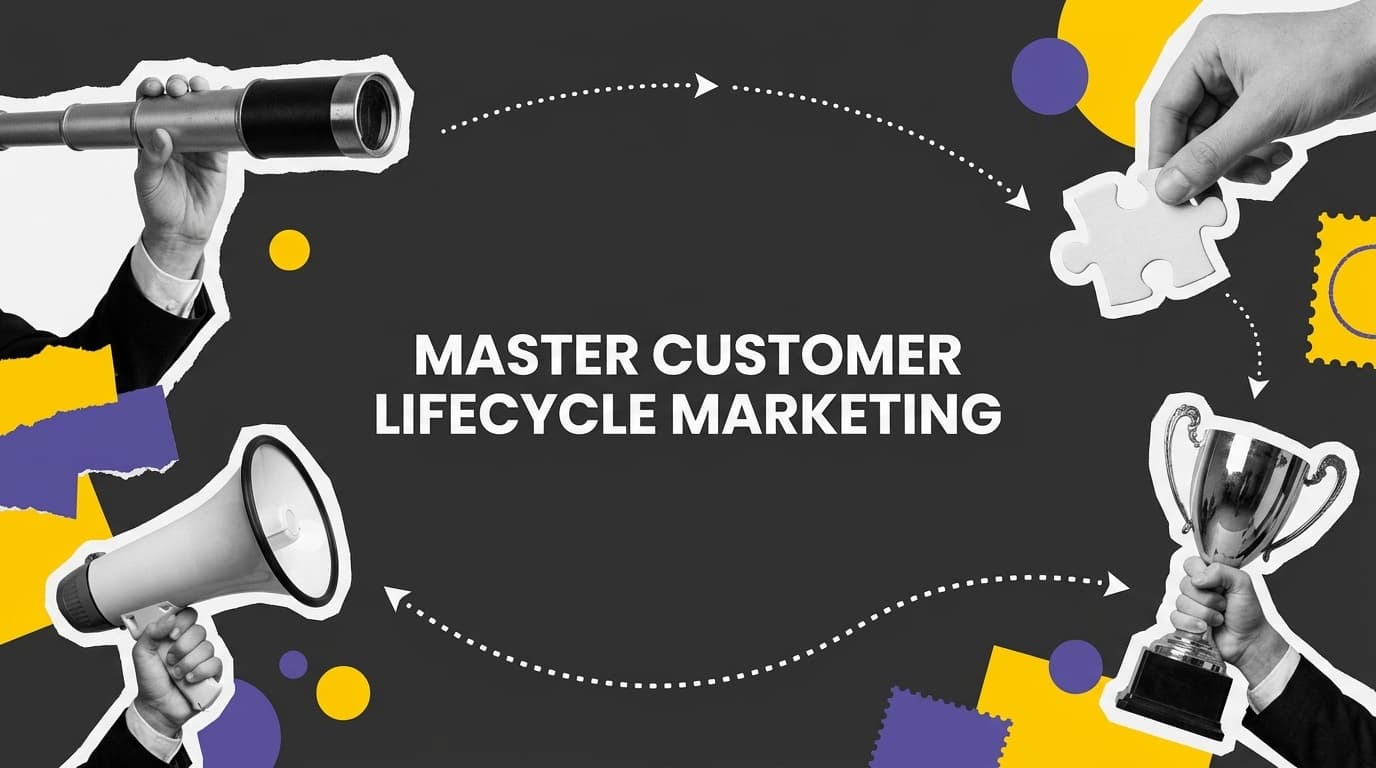
The customer lifecycle framework is a strategic model that maps out the various stages a user traverses, including awareness, consideration, conversion, retention, and advocacy. Instead of treating these as isolated events, this approach views them as a continuous, interconnected loop that requires specific communication tactics.
Why the journey matters more than the sale
When you understand the specific needs of a user at each stage, you stop guessing and start solving. According to Gartner (2025), 64% of B2B buyers find the buying process overly complex, meaning your ability to simplify their path is a massive competitive advantage.
- Awareness: Focus on education and solving immediate pain points.
- Consideration: Provide social proof and detailed product comparisons.
- Conversion: Remove friction and offer clear value propositions.
- Retention: Deliver ongoing support and exclusive insights.
- Advocacy: Empower your best customers to become brand ambassadors.
Your marketing should feel like a conversation, not a transaction.
How do you align your content with the lifecycle?
Aligning your content requires a deep understanding of user intent at every touchpoint. By leveraging Websites optimised for AEO, GEO and SEO, you ensure that your brand is present when users are searching for solutions, regardless of where they are in their journey. It is about being helpful, not just being loud.
Building a feedback loop
To truly master this, you must integrate data into your creative process. According to HubSpot (2026), teams that use integrated CRM data to trigger lifecycle emails experience a 28% higher engagement rate than those using static segments. This level of precision allows you to nurture leads through Conversion copywriting & campaign messaging that speaks directly to their current challenges.
Stop selling to everyone and start serving the right person at the right time.
Consistency is the secret sauce. When your messaging remains cohesive from the first ad click to the final renewal, you build a brand that people actually want to stick with. This isn't just about marketing; it is about creating a better experience for your users.
Frequently asked questions
What is the most important stage of the customer lifecycle?
Retention is arguably the most critical stage because it is significantly cheaper to keep an existing customer than to acquire a new one. By focusing on post-purchase value and ongoing support, you turn one-time buyers into loyal advocates who drive sustainable, long-term revenue growth for your business.
How does AI change lifecycle marketing in 2026?
AI allows for hyper-personalisation at scale by analysing user behaviour in real-time. Instead of manual segmentation, AI agents can trigger specific content pieces based on individual interactions, ensuring that every user receives the exact information they need to move to the next stage of the journey without human intervention.
How do I measure the success of my lifecycle strategy?
Focus on metrics like Customer Lifetime Value (CLV), churn rate, and repeat purchase rate. These indicators provide a clearer picture of your long-term health than vanity metrics like website traffic. A successful strategy will show a steady increase in CLV as your customers engage more deeply over time.
Can small businesses implement lifecycle marketing?
Absolutely. You do not need a massive enterprise team to start. Begin by mapping your current content to the five stages of the journey and identifying gaps. Even simple automated email sequences that provide genuine value can significantly improve your conversion and retention rates without requiring complex, expensive technology stacks.
What is the difference between a sales funnel and a lifecycle?
A sales funnel is linear and typically ends at the point of purchase. A lifecycle is circular and focuses on the entire relationship, including what happens after the sale. While a funnel focuses on closing, a lifecycle focuses on building a lasting partnership that benefits both the brand and the user.
Start your lifecycle transformation
Mastering the customer lifecycle is not an overnight project, but it is the most effective way to build a resilient, growing business. Start by auditing your existing content to see if you are truly serving your customers at every stage, or if you are simply pushing for the next sale.
If you are ready to refine your approach, our team at Flow Productions is here to help. Whether you need a fresh content strategy or a complete overhaul of your digital messaging, we have the expertise to guide you through every step of the journey.